

Meal planning approach
Meal plans built around Indonesian food
A meal plan is only useful if you can cook it, afford it, and stand eating it next month. Ours are written from local ingredients and your household’s actual menu.
What this page covers
How the plan gets built, and why it looks the way it does.
Every plan is written by a registered nutritionist from your own kitchen, your own market, and your own week. Nothing here is a template you copy from a book. Below you will find how local foods shape the ingredients, how portions are set to you rather than to a chart, how the week is worked around who cooks and when you eat out, what actually appears in the written plan, how family meals are handled, how outings and travel fit in, and what happens when a meal is not working.

Local food first
Plans start in the market, not in a specialty store
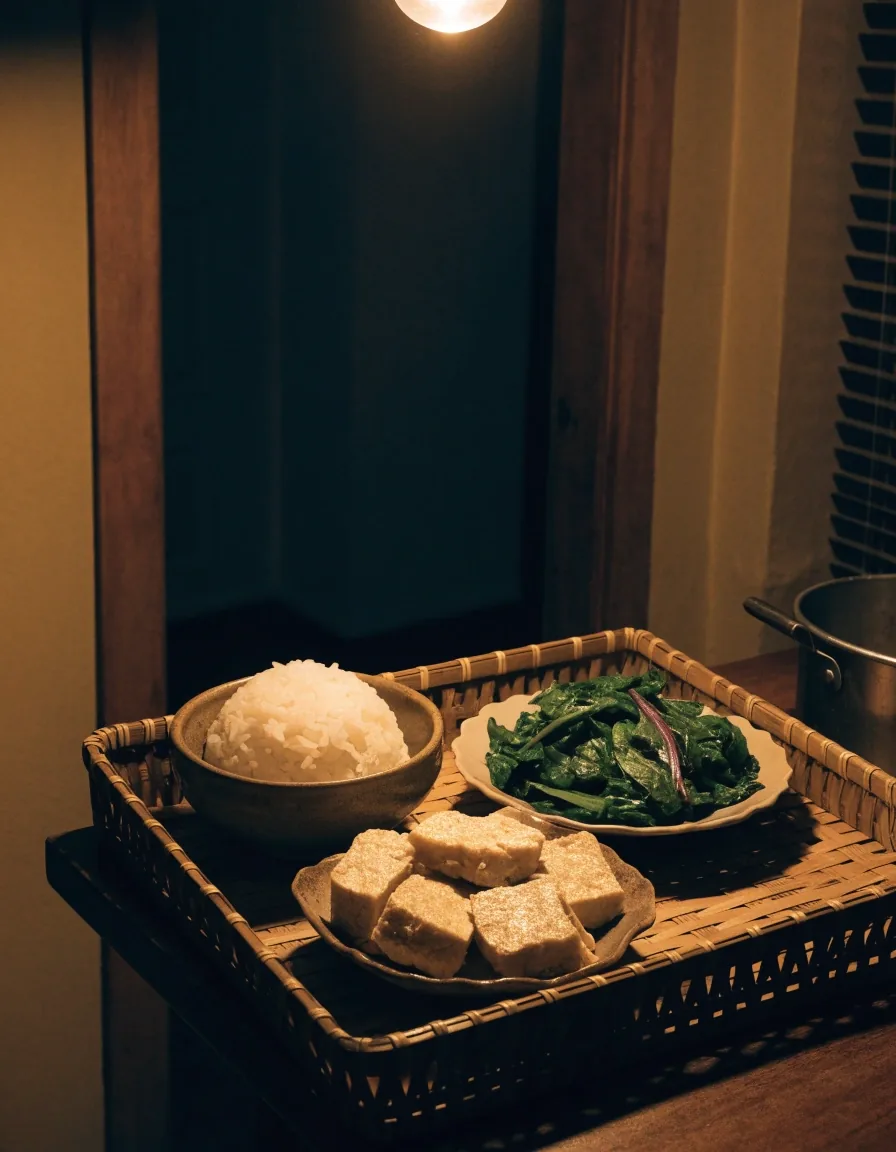
Plans are built from what is in your market: rice, tempeh, tofu, eggs, fish, chicken, greens, and the vegetables in season near you. Familiar dishes appear where they fit, adjusted in portion and preparation. You should not need to shop at a specialty store or order imported ingredients to follow the plan.
Seasonality matters here. When water spinach is cheap and good, it carries the week. When it is thin, the plan leans on long beans, cabbage or whatever your market has. If a food is unavailable or unwanted, it gets replaced rather than repeated as advice.
A typical weekday plate
- Steamed rice
- one measured scoop
- Tempeh or tofu
- set by body weight and activity
- Vegetable, in season
- generous, cooked simply
The written plan shows rough portions for the day, not weighed grams at the table.
Portions set to you
A desk job and heavy work do not get the same plate
Portion sizes follow your body, your activity, and your goal, not a template. Someone working a desk job in Jakarta and someone doing physical work in Palembang do not get the same plate.
Numbers are explained, not just assigned. You should finish the session understanding why your portion is what it is, because that reasoning is what lets you adjust later without asking.
Rice at lunch
180
grams, cooked
Protein portion
120
grams, fish or poultry
Vegetable portion
200
grams, two hands full
The figures above are an illustration of how a portion is written out for one adult. Your own numbers come out of your intake conversation and will differ. What stays the same is that each one arrives with a reason attached: the number is the answer, the reason is the part you keep.
Built around your week
The week decides the shape of the plan
The plan accounts for who cooks, how much time they have, and which days you eat away from home. Plans that ignore your real week get abandoned by the second week, so the schedule is written first and the recipes are fitted into it.
Two cooking sessions
A realistic plan might keep weekday meals simple and put effort into two or three longer cooking sessions, then stretch those bases across the week with different sides.
Fixed family meals
It might also build in the Friday family meal that is not going to change. The plan works around it instead of asking the household to give it up.
Who is at the stove
If someone else does most of the cooking, their time and their comfort with the recipes set the pace. A plan one person cannot cook is not a plan for the household.
Days away from home
Office lunches, campus canteens and travel days get their own notes, so you are not improvising on the days you have least control over.
Inside the plan
What a written plan includes
The structure is designed so you can follow it without rereading it every morning. It is short on theory and long on the parts you actually use at seven in the evening.
Meals and rough portions for the day
pagi · siang · malam
Swaps when an ingredient is unavailable
named alternatives, not diet advice
Notes on preparation that save time
what to cook ahead, what to keep simple
Simple guidance for eating out and ordering in
warung, catering, delivery
What to do when the day goes sideways
one page, easy to find
Adjusting for family meals
One table, adjusted portions
Cooking two separate menus is a recipe for quitting. Where possible, the plan adjusts portions within a shared family meal rather than creating a separate diet. The rice pot stays one pot; the difference is how much lands on each plate.
Parents feeding children get particular attention here, since child nutrition and adult goals often share the same table. That covers the vegetables a child can be expected to eat, the way a dish is cooked so it still works for everyone, and where the household can hold one standard rather than two.
Eating out, celebrations, travel
Written for weddings, office lunches and Lebaran
Plans fail at weddings, office lunches, and Lebaran, so they are written with those in mind. You get practical guidance for ordering, portion awareness, and how to return to routine the next day without a guilt cycle.
Nothing on the plan requires you to skip family events. The notes cover how to take a normal serving at a celebration, what to reach for when a buffet is the only option, and how the following day goes back to the usual shape.

When the plan needs to change
Say something, and it gets replaced
Plans get revised at monitoring and evaluation sessions. If a meal is not working, it is replaced. If portions feel wrong, they are adjusted. If a food causes discomfort, it is noted and swapped. You are not expected to force a plan that does not fit. You are expected to say something.

If this happens
The plan changes, not you
A dish does not work for the household
replaced with a dish that does
Portions feel too large or too small
adjusted with a reason
A food causes discomfort
noted and swapped
An ingredient is off the market
the swap list covers it
Bring anything you noticed to the next session — what felt too heavy, what you skipped twice, where the week broke down. Those notes are the material the revision is built from.
What meal planning is not
It is not a medical diet, a treatment protocol, or a substitute for clinical care. If your situation requires medical nutrition therapy, the nutritionist will refer you. Meal planning here is practical structure for everyday eating, and that is a wide enough job on its own.
Everything on this page is guidance for ordinary meals, built with a registered nutritionist. It supports the way you eat day to day and does not replace advice from your doctor.
Practical questions
Before you register
Short answers to the questions visitors send us most often about how the plan works.
More questions answeredHow long does it take to receive the written plan?
After your intake session the nutritionist writes the plan from what you shared — your menu, your market, your week — and it arrives before your next scheduled session. If anything is unclear on the first read, the notes and the follow-up session are where it gets explained.
Can the plan be built around a specific diet or allergy?
Yes. Foods you avoid for medical, religious, ethical or personal reasons are taken into account during the intake, and the plan is written without them. Tell the nutritionist about any condition or medication so the plan can be shaped responsibly from the start.
Do I have to weigh my food every day?
No. Portions are written as rough amounts you can judge with a bowl, a hand or a plate. The numbers exist so the reasoning is clear, not so you carry a scale to the table. Most households settle into the pattern within a couple of weeks.
Is the consultation online, and is it for families too?
Sessions run online, so you can take part from home and the plan is written from the meals your household already eats. Families are welcome; when children are at the table, the plan is adjusted for shared dishes rather than a second menu.
Start with a conversation about your week
Registration takes you to an intake session with a registered nutritionist, where the market, the household and the daily schedule get mapped out. The written plan follows from there.